
- Director: Paul Greengrass
- Screenplay: Paul Greengrass
- Producer: Jason Blum, Gregory Goodman, Joanna Kaye, Joe Neurauter, Lars Sylvest
- Cast: Andrew Garfield, Jamie Bell, Stephen Dillane, Tom Hollander, Cosmo Jarvis, Thomasin McKenzie, Jonny Lee Miller, Woody Norman, Katherine Waterston
- Cinematography: Pål Ulvik Rokseth
- Editing: William Goldenberg
- Score: Volker Bertelmann
- Genre: Historical action drama
- Runtime: 128 minutes
A devastating disease. A huge wealth gap between common people and the upper classes. The oppression of those from a lower income background. Sound familiar?
The parallels with today’s society are as clear as day. In 1380s England, the Black Death has ravaged the country. King Richard II is not yet a man so his council carry out what actions they see fit. With money running out and the idea of taxing the church out the window, they decide to tax the labourers.
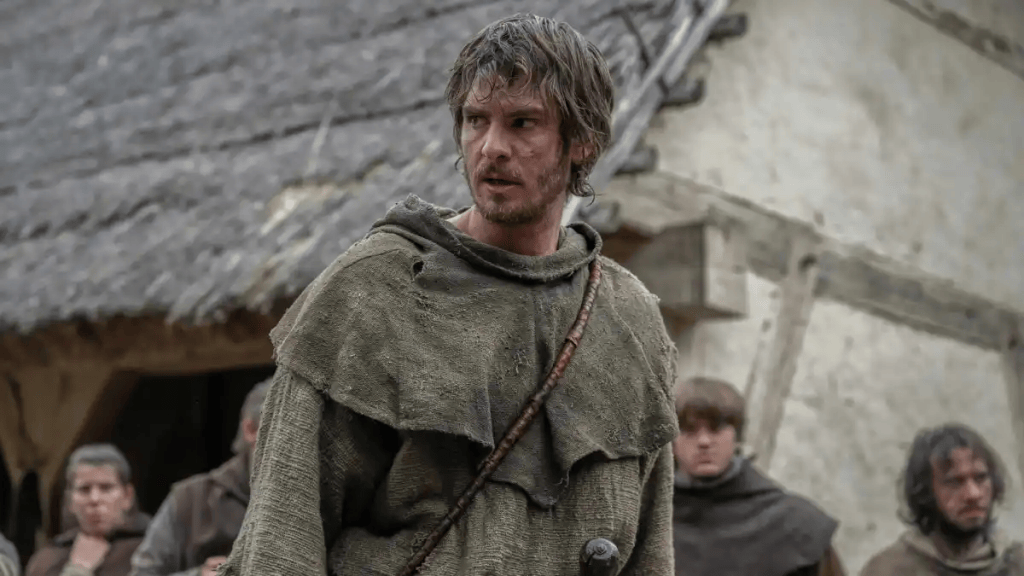
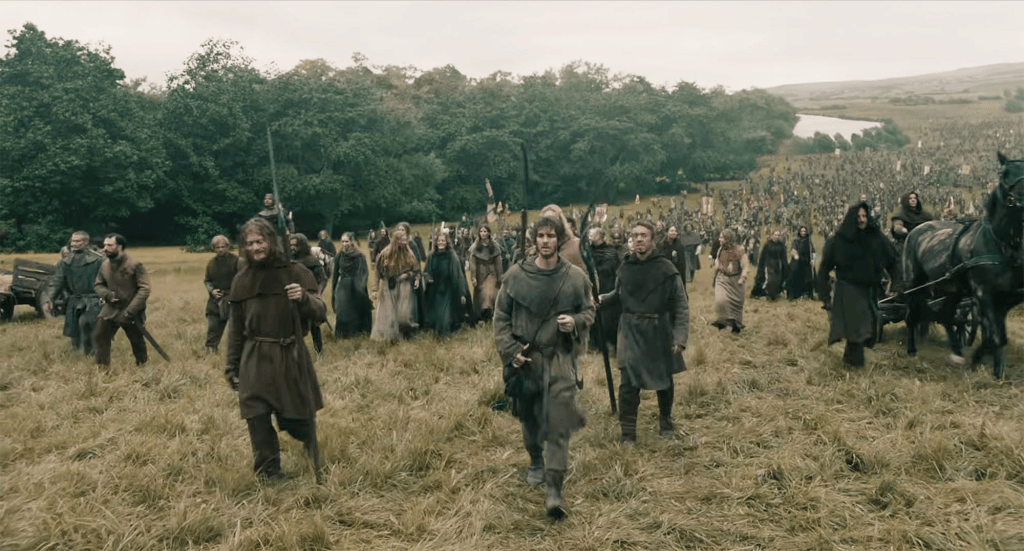
An unnamed ploughman (Andrew Garfield) sets alight a powder keg of rebellion when asked to pay his annual taxes. He is required either to pay death tax (for his deceased family) or the king’s tax. Whichever one leaves him out of pocket and after seeing guards molest young women, takes immediate action. He fights back, instigating a revolt which amasses a great number of peasants from up and down the land.
It’s so satisfying watching the common folk rising up and taking control of their lives. Of course, there’s always parties that take things to the extreme. Whereas the Ploughman seeks a meeting with the monarch to present a petition for a fairer society, cleric John Ball (Jamie Bell) is hungry for vengeance towards those he deems traitors. Ball, branded a heretic by the church, is an extremist who has the ear of his fellow man. And when he and his throng of rustics reach the capital, the ensuing riot gets out of hand. Foreign merchants are victimised. Yet more salient similarities.
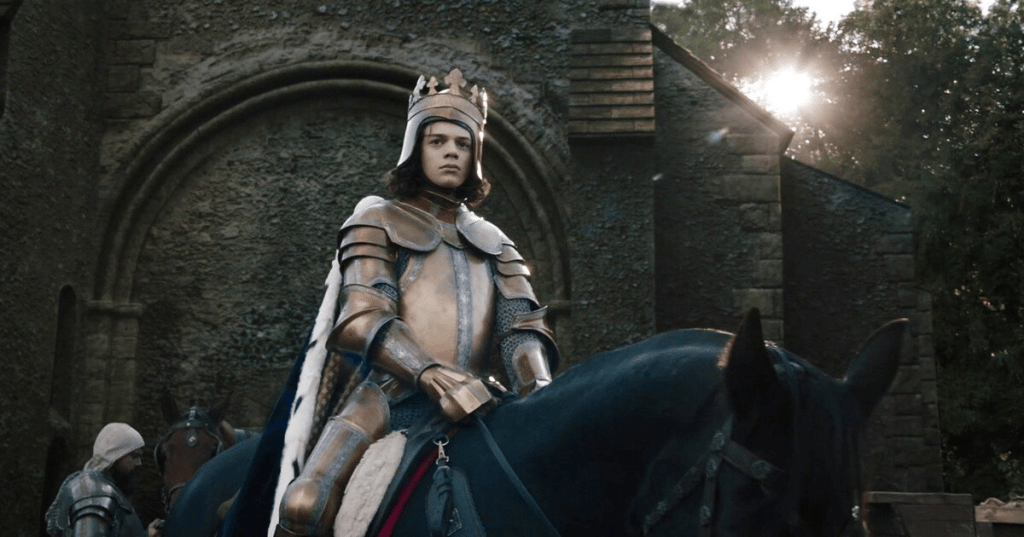
The battle sequences are so cinematic. You can’t help rooting for the underdogs in the maelstrom: the peasantry. The drab garb of these people are in such contrast with the opulence of the nobility. Joan of Kent’s bejewelled headdress alone is a marvel. Being granted an audience with the royals is a disgusting event due to the display of affluence through their garments. Richard has some brass neck to greet his loyal servants whilst high up on horseback.
The film was, for a spell, marketed as a Robin Hood origin tale. I can understand why: an epilogue centres on the Ploughman and his crew, clad in green, accosting the carriage carrying the king. Robin in all but name. We want to see the king get his just desserts but the scene is wholly unnecessary. Gluing aspects of English folklore to the relevant real story of the Peasants’ Revolt is Greengrass ploughing the sand.
My rating: 7 / 10