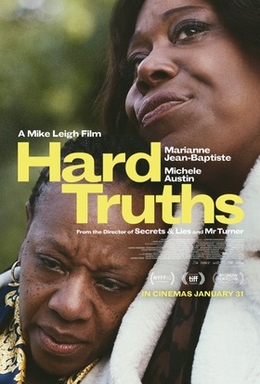
Hard Truths (2024)

  • Director: Mike Leigh
  • Screenplay: Mike Leigh
  • Cast: Marianne Jean-Baptiste, Michele Austin, David Webber
  • Cinematography: Dick Pope
  • Editing: Tania Reddin
  • Score: Gary Yershon
  • Genre: Drama
  • Runtime: 97 minutes

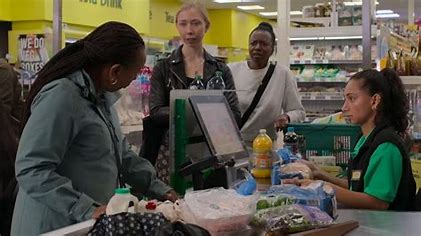
Master of the mundane Mike Leigh returns with ‘Hard Truths’, a character study about a grouchy middle-aged woman, Pansy Deacon (Marianne Jean-Baptiste, star of Leigh’s critical acclaimed ‘Secrets & Lies‘), who is perpetually angry at people – berating shopworkers, picking verbal fights with customers waiting behind her in the supermarket queue. She literally wakes up shouting.

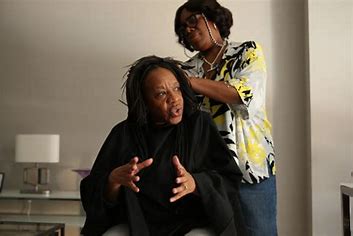
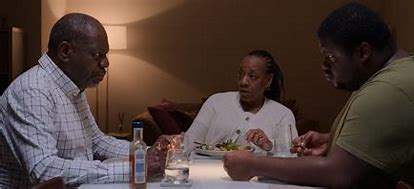
Unbelievably so, she has a (long suffering) husband and an overweight son (whose only escape from his mother’s wrath is by taking daily constitutionals around the block). Pansy and her sister Chantelle (Michele Austin) are like night and day; while Pansy rails against the world, Chantelle is warm and considerate. They could’ve come from two different planets.

Pansy is a sick woman – as she keeps on reminding us. Exhausted by chronic fatigue, crippled by social anxiety combined with an compulsive obsession with cleanliness, she’s being kept prisoner by her own illness. Obviously there’s something deeper than the basic surface-level anger; it’s akin to trauma, arising in outbursts of ire.

Jean-Baptiste delivers a masterclass in hostility; Pansy is a real force of nature and her brashness is amusing. She’s an active volcano prepared to erupt at some poor soul. Even in the moments of quiet, she commands the audience’s attention with the anticipation of what vitriol will spew out of her gob. Despite her unbridled rage, she’s not a monster – I have a lot of empathy with Pansy’s struggles with the general public. In fact, I’ve never related more to a fictional person. 

My rating: 8 / 10
Here (2024)

  • Director: Robert Zemeckis
  • Screenplay: Eric Roth, Robert Zemeckis
  • Cast: Tom Hanks, Robin Wright, Paul Bettany, Kelly Reilly
  • Cinematography: Don Burgess
  • Editing: Jesse Goldsmith
  • Score: Alan Silvestri
  • Genre: Drama
  • Runtime: 104 minutes

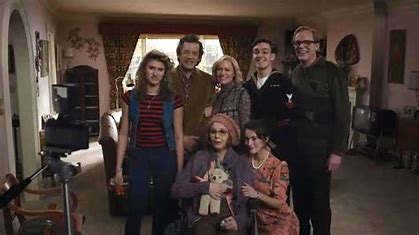
One house – various occupants. We observe multiple generations in a single space, even before the construction of the building (in a sequence involving the meteor that wiped out the dinosaurs) – all the drama unfolds within the same four walls, the camera positioned at the corner of the living room as a constant.

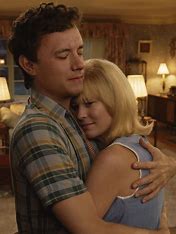
The main focus through the decades is the Young family, primarily Richard and his wife Margaret (Tom Hanks and Robin Wright, respectively), and by extension Richard’s parents, his war veteran father (Paul Bettany) and mother (Kelly Reilly). We catch glimpses of other eras; a budding aviator in the early 1900s, a free-spirited wartime couple, ultimately reaching the 2020s (as evidenced by face masks and elbow-bumping).

The storytelling is non-linear – as we hop between times (as depicted by décor and music), a white-outlined square appears onscreen and holds the action inside as everything else in shot gradually shifts around. It’s a little scattered but I appreciate the inventive device to change the environment from one time period to another.

Here’ reunites the team behind Academy Award favourite ‘Forrest Gump’; director Robert Zemeckis, screenwriter Eric Roth, actors Hanks and Wright, plus composer Alan Silvestri for a kindred jaunt into pop culture history.

For ethical reasons, I believe the so-called ‘digital de-aging’ used should be forbidden; it makes people look like they’re in a video game cutscene. This unconvincing technology only hinders the film when the characters are in the foreground, which is a small portion of the runtime but jarring nonetheless. You’re expecting me to suspend my disbelief and imagine Tom Hanks is playing a 20-something year old despite having the vocal tones of someone triple his age. It’s tantamount to casting grown adults to play teenagers.

Life is celebrated here – the bliss shared, the hardships suffered, births, deaths, ad infinitum; and while sappy, it’s coming from the right place.

My rating: 7 / 10

We Live in Time (2024)

  • Director: John Crowley
  • Screenplay: Nick Payne
  • Cast: Andrew Garfield, Florence Pugh
  • Cinematography: Stuart Bentley
  • Editing: Justine Wright
  • Score: Bryce Dessner
  • Genre: Romantic drama
  • Runtime: 108 minutes

Take:

one plot.

Add:

a dollop of sentimentality.

a pinch of laugh out loud moments.

an ounce of hard-hitting reality.

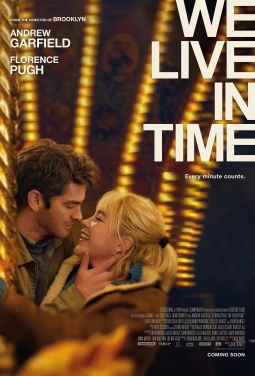
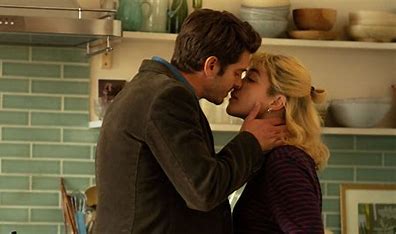
Stir it all in a bowl, bake in the oven for 108 minutes – and voilà – you’ve got the touching story of a couple who navigate the chaos of illness and pregnancy, retaining warmth at its core.

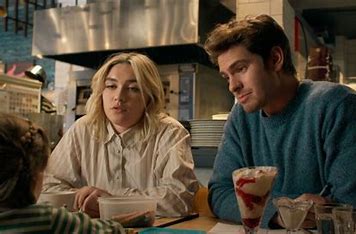
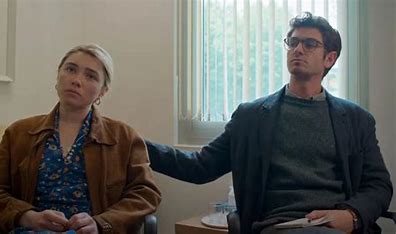
Employing a non-linear structure, ‘We Live in Time‘ centres on chef Almut Brühl (Pugh) and Weetabix representative Tobias Durand (Garfield) (as to why they’ve randomly got Continental European-sounding names is anyone’s guess) and the decade they spend together. They meet when Almut runs Tobias down as he tries to cross a road at night whilst on the hunt for pens to sign divorce papers – not exactly the typical first date at Nando’s.

The timey-wimey narrative makes it a smidge confusing as to whereabouts they are in the timeline if not already spelled out to us viewers. Within the opening five minutes of the movie… *boom* Almut is suddenly pregnant …*boom* she’s now been diagnosed with cancer (the early reveal softens the blow a little, as opposed to a weepy second act revelation). It’s an unconventional approach to the usual ‘boy meets girl’ concept, a reflection of the unpredictable nature of life. You never know what’s going to hit you next (unless it’s Almut with her car again).

Other characters fade into the background – the film is carried by two engaging performances from Pugh and Garfield, the pair have a natural chemistry. Even though Almut’s fate is sealed at the beginning, you still root for the couple in spite of insurmountable odds.

Bring a box of tissues with you in case.

My rating: 8 / 10