
- Director: Pablo Larraín
- Screenplay: Steven Knight
- Cast: Angelina Jolie, Pierfrancesco Favino, Alba Rohrwacher, Haluk Bilginer, Kodi Smit-McPhee
- Cinematography: Edward Lachman
- Editing: Sofía Subercaseaux
- Genre: Biographical psychological drama
- Runtime: 124 minutes
How do you solve a problem like Maria?
This Maria – La Divina herself, the world famous opera singer Maria Callas – is troubled; she has a narcotics addiction, her vocal abilities are in decline and she’s beset by hallucinations. One such vision is of ‘Andrax’, a young reporter (who shares his name with a drug she’s dependent on). He’s come to walk with her through her life, down leafy Paris streets, in the last seven days before her death aged 53.
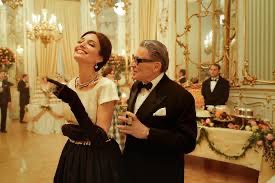
Ms. Callas is the third 20th century female icon Pablo Larraín has put under the spotlight, after Jacqueline Kennedy in ‘Jackie‘ (2016) and Princess Diana in ‘Spencer‘ (2021). Jolie’s Maria (performing 5% of the operatic vocals, the rest is lip-synced to the real Maria’s voice) is regal, enigmatic, and her accent an odd hybrid of English and somewhat ‘European’.
The film, separated into three acts and a curtain call similar to an opera, goes a little way into exploring what makes her tick but this all feels too shallow; we’re only scratching away a thin layer of an incredibly complex personality.
It’s a huge case of style over substance; an abundance of opulence and elegance; with Callas’ past triumphs on stage artfully depicted in black and white. However, I lost interest; I felt as though I was wading in the midst of mud, trudging around in search of the nearest escape. ‘Maria‘ inched along at the pace of a sloth, albeit one that was dressed to the nines in a satin gown. Ave Maria!
My rating: 5 / 10



 SilverScreen